Used RCF Subwoofer Price Guide for Dealers and Installers
What drives the price of a used RCF subwoofer, which models hold value, and how dealers should budget for condition, shipping and spares before committing.
RCF subwoofers come up often in the used export market, and buyers ask the same question every time: what should this box actually cost? There is no single answer, because RCF has built subs across several distinct families over the last fifteen years, and the secondary market treats each one differently. This guide explains what moves the price, which models you are likely to encounter, and how to budget without guessing.
Start with the product family, not the badge
RCF's subwoofer lineup splits into roughly three groups on the used market. The first is the ART and SUB series active boxes, single and dual driver, aimed at rental and small install work. The second is the HDL and TT+ touring range, where subs are designed as part of a modular system and carry matching rigging and presets. The third is older passive and horn-loaded designs, often sold in pairs and frequently unbranded or relabelled by the time they reach an exporter.
Each group has its own price logic. Active ART-series subs are commodity items: buyers compare them against new budget alternatives, and condition matters more than provenance. TT+ and HDL subs are system components, so their value depends on whether the matching tops, rigging and processing are available. Passive horn-loaded cabinets are priced almost entirely on driver condition and cabinet integrity, because there is no electronics content to assess.
What actually drives the number
Across all three groups, five factors set the price.
- Driver originality and condition. A genuine RCF driver with a clean cone and correct impedance is worth far more than a recone or a substitute. Ask for photos of the magnet label and the cone from both sides.
- Amplifier and DSP health on active models. Module failures are the single biggest value killer on powered subs. A box that powers up but has a dead channel or a noisy fan is a repair project, not a working unit.
- Cabinet and grille condition. Touring subs take road damage. Cracked corners, delaminated ply and bent grilles are cosmetic until they affect sealing or rigging points.
- Completeness. Original castors, covers, rigging hardware and link plates add real money when they are present, and are expensive to source separately.
- Quantity and consistency. Four matching boxes from one owner are worth more per unit than four mismatched singles, because a buyer can deploy them as a system.
Models you will see and how they price
RCF SUB series active subs in good working order tend to sit in the middle of the used market: clearly above generic no-name boxes, clearly below current-generation touring product. Dual-driver models command a premium over single-driver versions, but only when both drivers are original and the amplifier is confirmed working.
HDL system subs are priced with the array, not separately. If you are buying HDL tops, expect the subs to be bundled, and treat the package price as the real number. A used RCF HDL 20-A active line array system with subwoofers is a typical example of how these come to market as a complete set rather than as individual boxes.
Horn-loaded and passive cabinets are the wildcard. A pair of horn-loaded subs with unknown drivers should be priced as cabinet plus salvage value until you have inspected the drivers. If you cannot confirm the driver model, budget for replacement.
Comparing against non-RCF options
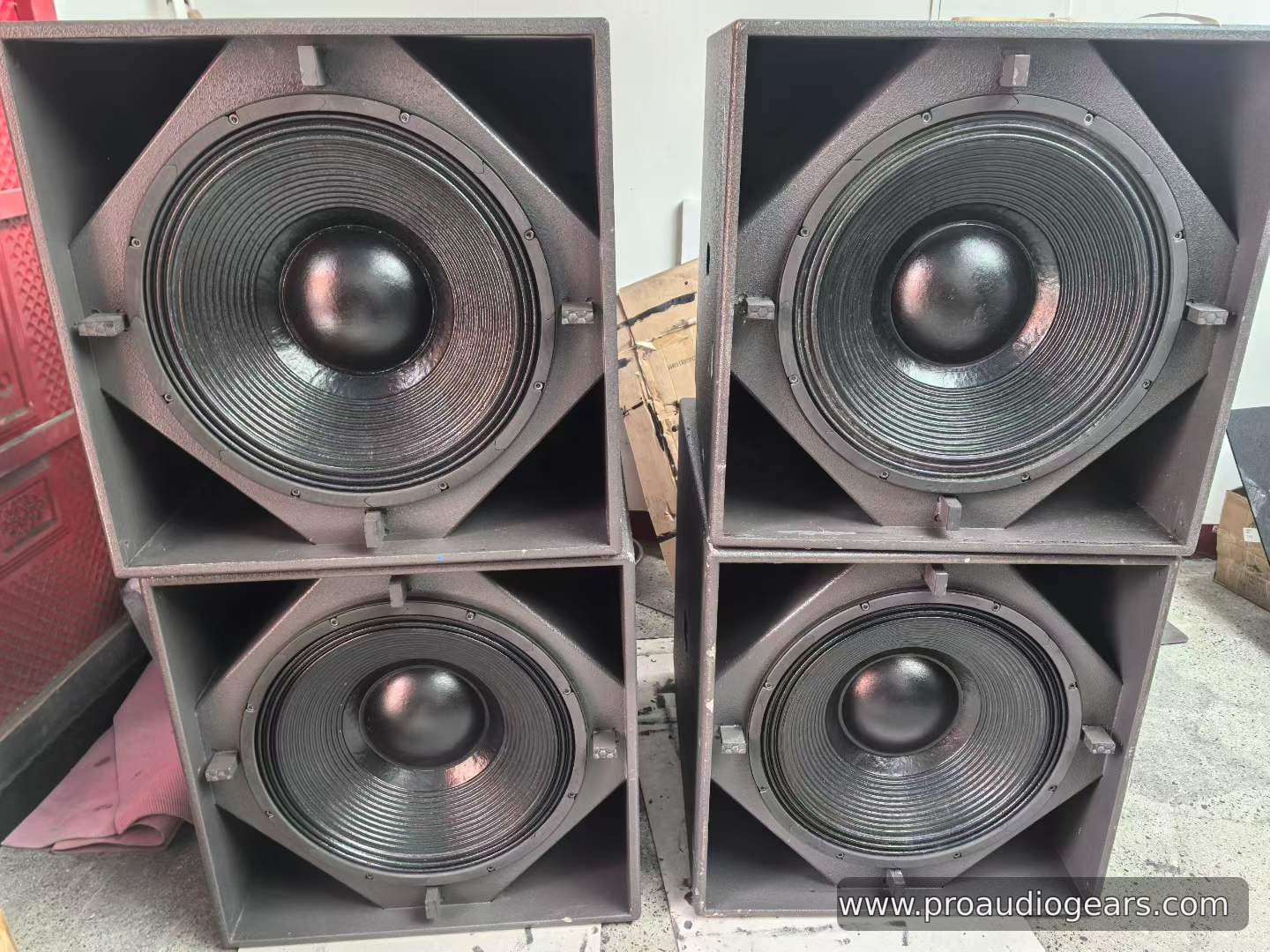
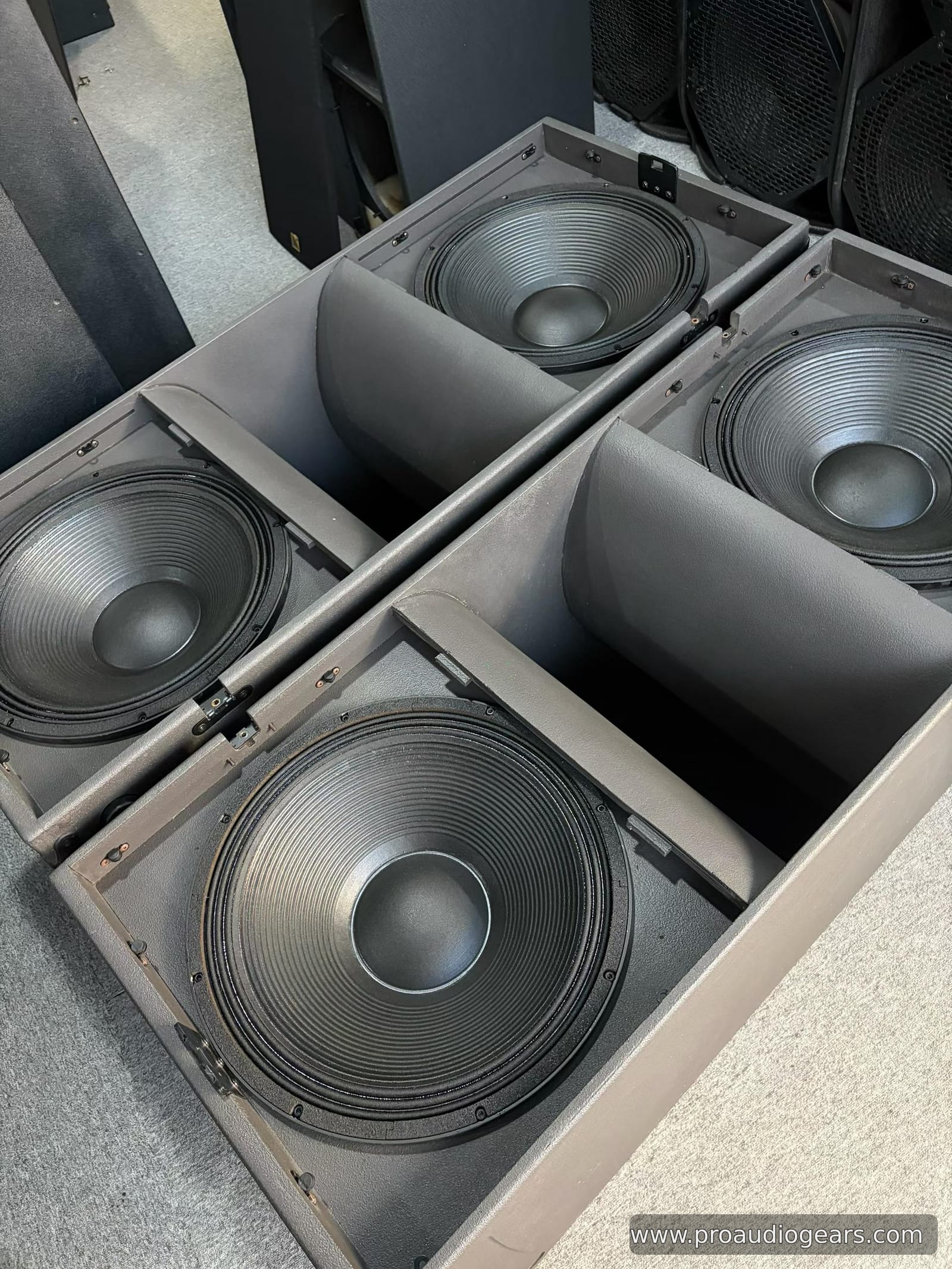
RCF is not the only name in this bracket, and it pays to keep alternatives in view. Dual 18-inch folded horn cabinets appear regularly at lower prices and suit buyers who already own amplification and processing. If your project is a fixed install with a rack of amps, a used dual 18-inch folded horn subwoofer cabinet can be a sensible value play, provided you inspect the drivers and check the cabinet for air leaks.
Likewise, when an RCF sub is offered at a suspiciously low price, compare it against other used subs on the market to see whether the discount reflects condition rather than opportunity. A used Nexo dual-driver subwoofer cabinet, for example, gives you a reference point for what a credible branded sub costs in similar condition.
How to budget properly
Work backwards from deployment cost, not sticker price. Add freight from China, crating for heavy cabinets, and any spares you will need. A sub that arrives with a failed amp module and no spare is not cheap at any price.
- Assume you will replace at least one driver across every four used subs you buy.
- Budget for amplifier module repair or replacement on any active box older than roughly eight years.
- Price castors, covers and rigging hardware separately if they are missing.
- Factor in testing time. Every sub should be run at moderate level for at least thirty minutes before it goes into inventory.
Inspection points before you commit
Ask the seller for a short video of each sub playing, not just a photo of it powered on. Listen for port noise, rattles and driver rub. Check the cabinet for water damage at the base, which is common on install boxes that have sat in clubs. Confirm the impedance and driver part number against RCF documentation. On active models, confirm the preset or DSP firmware state, because a mismatched module can limit output or protect the box prematurely.
If you are buying a batch, request serial numbers. Sequential or near-sequential numbers suggest a single original owner and consistent service history, which is a better signal than any cosmetic grade.
A realistic pricing approach
Rather than quoting a number that will be wrong by the time you read it, use a ratio method. Price a used RCF sub as a percentage of the current new price for the equivalent model, adjusted down for age, module risk and missing accessories. Working subs with original drivers and confirmed amplifier health land at the upper end of that band. Boxes with unknown driver history, missing hardware or unverified electronics land at the lower end, and should be treated as projects.
Get two or three quotes for the same model from different exporters before you commit. The spread between them tells you more about the market than any single listing, and it protects you from paying touring-system money for a rental-grade box.
If you are comparing options before requesting a quote, look at our used Unknown Unknown as a starting point.
If you are comparing options before requesting a quote, look at our used Generic Dual 18-inch Folded Horn Subwoofer as a starting point.