Used Dual 18 Subwoofers for Rental Fleets: Buyer Guide
A practical guide to buying used dual 18-inch subwoofers for a rental fleet: cabinet types, driver checks, amp matching, spares planning and realistic inspection steps.
Dual 18-inch subwoofers are the workhorses of a rental inventory. They get loaded out on Friday, stacked in a marquee on Saturday, and pushed hard by DJs who do not read the limiter settings. Buying them used is normal practice in this trade, but a fleet purchase is a different exercise from buying one box for a fixed install. You are buying repeatability, serviceability and a realistic spares position, not a single good-sounding cabinet.
Decide which dual 18 format fits your fleet
There are three broad families you will meet in the used market, and they behave differently in rental use.
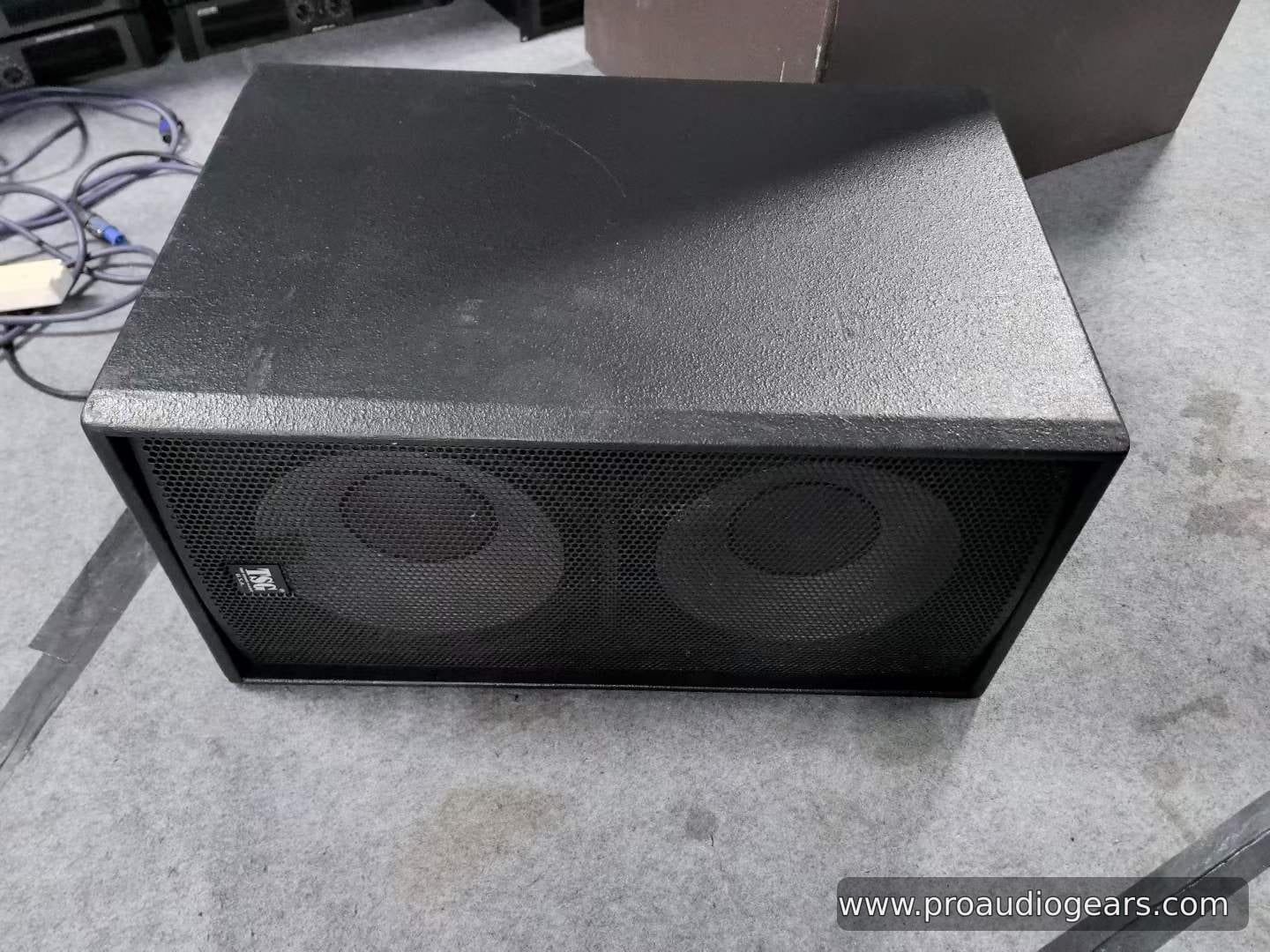
- Direct-radiating dual 18s. Front-loaded boxes with two 18-inch drivers in a shared or divided chamber. Usually the easiest to move, the most forgiving of amplifier choice, and the simplest to repair because driver access is straightforward.
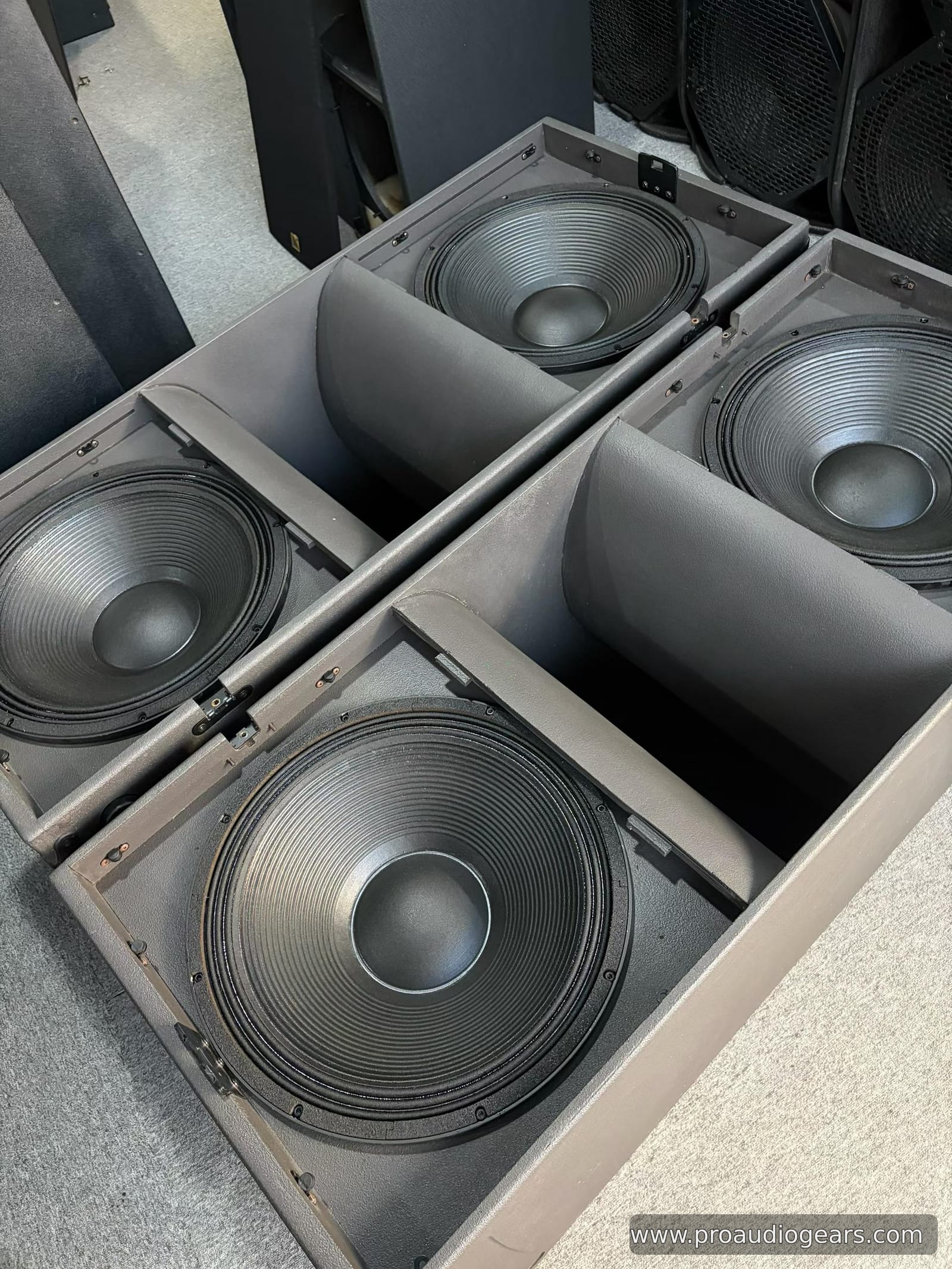
- Folded horn dual 18s. Higher sensitivity and more output per watt, but heavy, bulky, and sensitive to cabinet damage. A used dual 18-inch folded horn subwoofer cabinet can be excellent value for dance music and outdoor work, but only if the horn throat and internal bracing are intact.
- Hybrid and bandpass designs. Less common, harder to match to amplifiers and harder to source replacement drivers for. Generally avoid these unless you already own the same model.
For a fleet, uniformity matters more than the last decibel. Ten identical boxes that share one amplifier profile and one spare driver part number will earn more money than twelve mixed boxes that each need their own settings.
What to check on a used dual 18 cabinet
Inspection is mostly mechanical. Electronics can be replaced; a warped cabinet or a cracked horn throat usually cannot be fixed economically.
- Cabinet shell. Look for corner damage, delamination, water swelling at the base, and evidence of dropped loads. Check that the box still sits flat on all four feet and that the stacking recesses are not crushed.
- Baffle and horn throat. On horn-loaded designs, run a light inside and look for cracks around the throat, loose throat inserts and separation between the baffle and the side walls.
- Grilles and foam. Sagging grilles mean the box has been stacked badly. Missing acoustic foam behind the grille is cosmetic, but it tells you how the box was treated.
- Handles and pole mounts. Broken handles are a safety issue in a rental fleet, not a cosmetic one. Check every insert and every fixing point.
- Connectors. SpeakON sockets wear out. Push-test each one and look for scorching or a loose barrel.
- Drivers. This is the expensive part. Ask for a photo of each cone and each rear magnet. Look for recone evidence, glue runs, rubbing voice coils and mismatched drivers within a pair.
If you are buying a mixed lot, expect some boxes to be donor units. Price them that way.
Driver condition is where the money goes
A dual 18 has two drivers per box, so a ten-box fleet carries twenty drivers. In rental use, a reasonable planning assumption is that you will lose a small percentage of drivers per year to abuse, water ingress and simple fatigue. Before you commit, establish three things.
- Are both drivers in each box the same part number and the same nominal impedance?
- Can you still buy that driver, or a recone kit, in the quantity you need?
- What is the cost of a replacement driver relative to the price you are paying for the whole cabinet?
If the answer to the second question is no, the cabinet is a consumable. That can still be a sensible purchase at the right price, but it changes how you quote it. Do not buy a large lot of obsolete drivers unless the price reflects the fact that the fleet has a finite life.
Amplifier matching and processing
Most used dual 18s in the export market are passive boxes, so you are choosing the amplifier and the processing yourself. That is an advantage: you can standardise on one amplifier platform across the fleet.
- Match amplifier power to the driver's continuous rating, not its peak figure. A dual 18 rated at 1000 watts continuous per driver wants an amplifier channel that delivers that comfortably, with headroom for peaks.
- Check the impedance. Two 8-ohm drivers in parallel give 4 ohms per box; two boxes per channel give 2 ohms. Confirm your amplifier is rated for that load continuously, not just in a brochure burst rating.
- Set high-pass filters. A high-pass around the cabinet's tuning frequency protects drivers from infrasonic content in DJ material and from wind noise outdoors.
- Use a limiter you trust. Rental subwoofers die from clipped amplifier output far more often than from clean power.
- Keep processing presets identical across the fleet so any box can go out with any amplifier rack.
If you are also building a mid-high inventory, read our guide on matching line arrays with subwoofers before you commit to a box count. The ratio you choose determines how many dual 18s you actually need.
Buying a lot versus buying pairs
The used market offers both. A pair is easy to evaluate and easy to resell. A lot of eight or twelve boxes is where fleet economics start to work, but only if you inspect properly.
- Ask for serial numbers and photos of every box, not a representative sample.
- Ask which boxes have had driver replacements and when.
- Ask whether the seller will include any spare drivers, grilles or handles in the deal. On a fleet purchase this is often negotiable and worth more than a small discount.
- Confirm crating and shipping terms early. Dual 18s are heavy and bulky; freight can be a significant share of landed cost.
For comparison, a used Nexo dual-driver subwoofer cabinet is a useful reference point when you are assessing build quality and driver access on other brands. Look at how the drivers are mounted, how the cabinet is braced, and how easy it would be for your own technician to swap a driver in a warehouse before a weekend show.
Fleet practicalities people forget
- Storage. Dual 18s take up floor space. Plan racking or a stacking system before the boxes arrive.
- Transport. Check that your existing truck or trailer can take the box dimensions and weight, and that you have enough covers.
- Labour. Two people per box is the realistic minimum for stacking. If your crew is smaller, consider whether the format suits your typical jobs.
- Cabling. Standardise on one connector type and one cable length per box.
- Documentation. Keep a simple log per cabinet: driver replacements, connector repairs, cosmetic damage. It helps with resale and with insurance.
A realistic buying sequence
Start with the job mix, not the deal. Decide the maximum SPL and coverage you need for your typical outdoor and club work, choose a cabinet format, then buy only that format in quantity. Inspect every box mechanically, photograph every driver, confirm driver availability and amplifier compatibility, and price in spares. If the numbers only work because you assume nothing will break, they do not work.
Buying used dual 18s for a rental fleet is a sound strategy in most markets. The margin comes from standardisation, inspection discipline and a realistic spares budget, not from finding the cheapest lot on the listing page.