18 Inch Powered Subwoofer Wholesale: A Dealer's Buying Guide
What dealers and rental companies should check before buying 18 inch powered subwoofers in bulk: amplifier platforms, cone condition, DSP limits and realistic inventory planning.
An 18 inch powered subwoofer is the workhorse of most low-frequency inventory, and buying them in quantity is where a lot of dealers get the maths wrong. A single box bought for a one-off install is a project decision. A pallet of them is an inventory decision, and the two should be evaluated differently. This guide covers what actually matters when you are sourcing 18 inch powered subs in wholesale quantities, without pretending that every used box is a bargain.
Start with the amplifier platform, not the driver
On a powered subwoofer the amplifier module fails more often than the cone, and it is the harder part to source. Before you commit to a batch, identify the amp platform in each cabinet and confirm that spares, service documentation or a competent repair path exist in your market. Older modules with discontinued switch-mode supplies can turn a cheap pallet into a shelf of dead weight.
Ask for the module revision number, not just the model. Manufacturers often changed amp boards mid-production without renaming the product, and a mixed pallet may contain two or three revisions. That matters for your service bench and for resale honesty.
What to inspect on a used 18
- Cone and surround: look for creasing, sun damage and foam rot on older boxes. A re-cone is possible but changes your margin.
- Spider and voice coil rub: a gentle push test should be silent and even. Any scraping means the coil is off-centre.
- Cabinet joints and ports: an 18 moves a lot of air. Loose joints and cracked port flares are common on rental stock.
- Grille and handles: cosmetic, but a good indicator of how the box was treated.
- Amp module heatsink and fan: dust loading tells you the duty cycle the box has seen.
- Input panel and connectors: worn Speakon or XLR sockets are cheap to fix but a warning sign.
Condition grades help you sort a batch quickly, but they are a summary, not an inspection. Grade B rental stock can be perfectly serviceable and still have scuffed corners and a tired grille.
Match the sub to the mid-high system you already stock
Wholesale buying only pays off if the subs work with cabinets you can already supply. A dual 18 with a high crossover point behaves very differently from a single 18 tuned low, and the difference shows up the moment you deploy them under a line array. If you are pairing subs with a flown system, decide early whether you want cardioid arrays, ground-stacked blocks or a distributed approach, because that changes how many boxes you need per room.
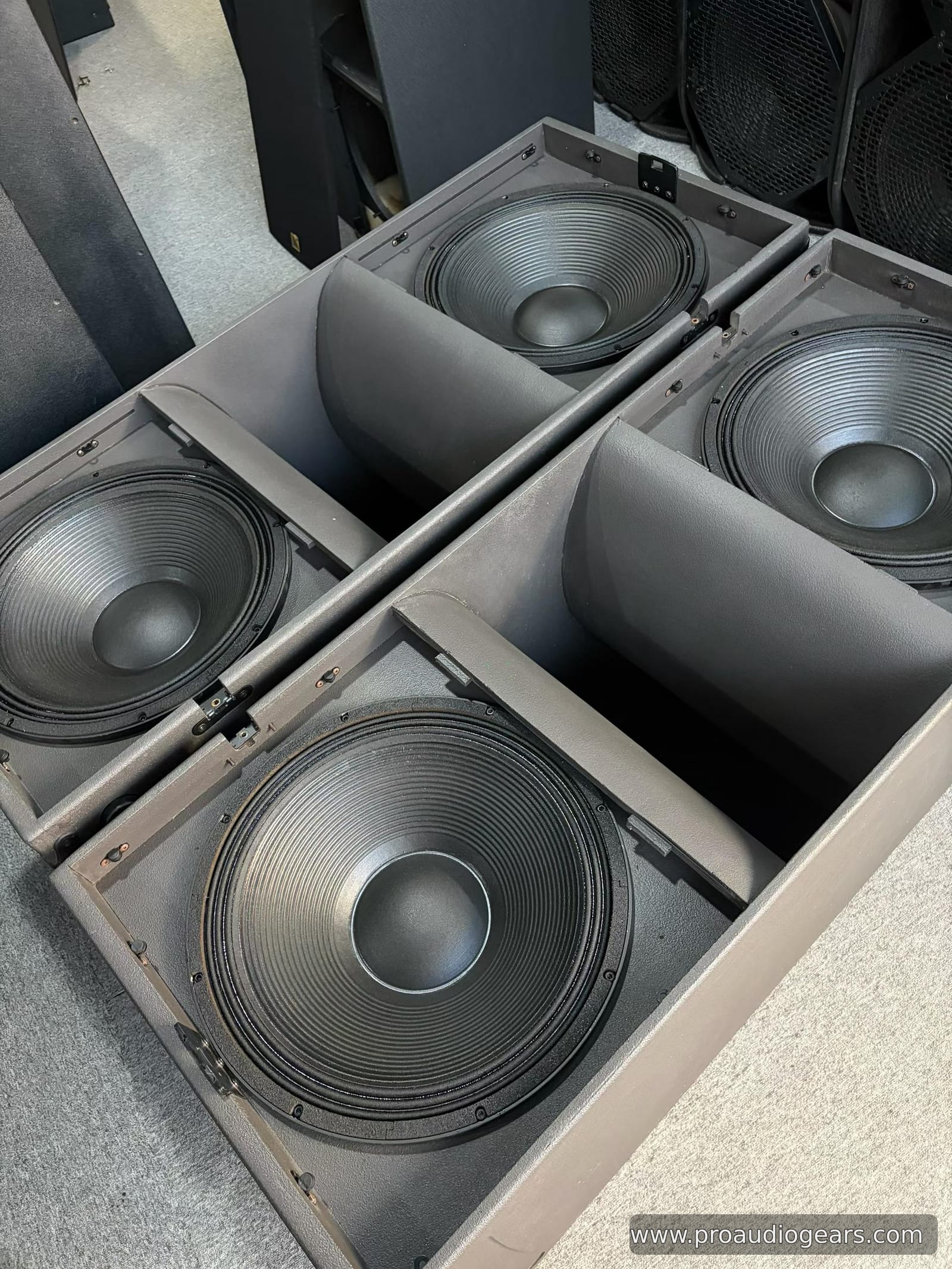
For example, a used JBL VTX B28 dual 18 inch subwoofer suits dealers already working with JBL VTX arrays, where the processing presets and rigging logic are known. A used RCF SUB 8006-AS powered subwoofer is a more general single-18 option that pairs easily with RCF mid-high boxes and is simpler to deploy in ones and twos. Neither is universally better; the point is that your existing stock should drive the choice.
Power, current and the venue reality
A powered 18 draws real current. Two or three on a single 16A circuit is often the practical ceiling, and that figure should shape how many you buy for a given venue rather than how many you can afford. Dealers who buy purely on cabinet count frequently end up renting generators or rewiring distro boards.
Check the manufacturer's current draw figures at one-eighth and one-third power, not just the peak rating on the back panel. Then plan your batches around typical rooms: a 300-capacity club with four subs and a 600-capacity room with eight are different products for your catalogue, even if the box is identical.
DSP, presets and the settings nobody documents
Many powered subs ship with onboard DSP and factory presets. Ask whether presets are locked, whether the previous owner changed them, and whether you can restore defaults. A box that has been re-tuned for a specific install can sound wrong in the next room, and the fault will be blamed on the cabinet.
If the sub has no DSP, plan for an external processor and budget for it. A used Lake LM 44 or dbx DriveRack PA2 in your rack is often the difference between a clean crossover and a muddled one, and it also lets you standardise settings across a mixed batch.
Quantities, spares and the wholesale calculation
Wholesale pricing only works if you plan the batch realistically. A sensible split for a dealer is roughly one spare amplifier module or donor cabinet per eight to ten subs, plus a stock of grilles, handles and input panels. Consumables are cheap; a dead module in a remote install is not.
Build your landed cost properly: unit price, freight, crating, duties and the labour to test each box. Then decide whether the batch is for resale, rental or install. Rental stock needs cosmetic consistency; install stock does not. Mixing the two in one purchase is how dealers end up with cabinets they cannot move.
Testing before the pallet leaves
Insist on a functional test for every unit, not a sample. A short sweep at moderate level will reveal rub, rattle and port noise, and a quick check of the amp module's idle behaviour catches failing supplies. Record the results per serial number and keep them with the shipment paperwork. If a seller cannot provide this, price the risk in.
Finally, confirm voltage and plug type match your market. A batch of subs configured for a different mains voltage is a rework job, not a stock item.
Buying 18 inch powered subwoofers wholesale is a logistics and service exercise as much as an audio one. Get the amp platform, current draw and spares plan right, and the boxes will earn; get them wrong and the discount disappears in the first month of service calls.