Used Point Source Speakers for Events: A Practical Buyer Guide
Point source speakers still make sense for corporate events, weddings and small stages. Here is what to check before buying used boxes for your rental fleet.
Point source speakers never really went out of fashion in event work. Line arrays get the attention, but for corporate AV, weddings, conference breakouts, small stages and side fills, a well-chosen point source box is faster to deploy, easier to aim and cheaper to own. Buying used is where most rental companies and venues get their best value, provided they know what they are actually buying.
This guide covers the practical side: what point source boxes suit which events, what to inspect, and where used stock tends to fall short.
What point source actually means for event work
A point source cabinet is a single enclosure with a woofer and a horn or waveguide covering the full range, usually with a defined coverage pattern such as 60x40 or 90x60 degrees. Sound radiates from one acoustic centre, which means predictable behaviour over distance and less interference between boxes.
For events this matters in three ways. First, one box per position often covers a room, so rigging time drops. Second, aiming is intuitive: point the horn at the audience and you are largely done. Third, a single cabinet on a pole, a tripod or a small truss is a complete system, which suits jobs where a line array would be overkill and over budget.
Where point source loses is throw and even coverage in deep rooms. If you are covering 30 metres or more with a single hang, a line array is the correct tool. For everything from a 50-person breakout room to a 400-capacity corporate dinner with delays, point source is usually the sensible answer.
Matching the box to the job
Rental fleets tend to standardise on two or three point source models rather than a mixed bag, because processors, presets and spares all get simpler. Before you buy used, decide which jobs the boxes will serve.
- Conference and breakout rooms: compact 8-inch or 10-inch two-way boxes, ideally with a rotatable horn so the cabinet can sit horizontally on a shelf or be flown tight to a ceiling.
- Weddings and small live stages: 12-inch two-way boxes on poles with a sub underneath, or 15-inch boxes for fuller vocal and playback reproduction without subs.
- Corporate plenary and medium rooms: 12-inch or 15-inch boxes with controlled pattern, often two per side plus front fills.
- Delay and fill positions: small coaxial boxes, which give consistent coverage from a single point and are easy to hide.
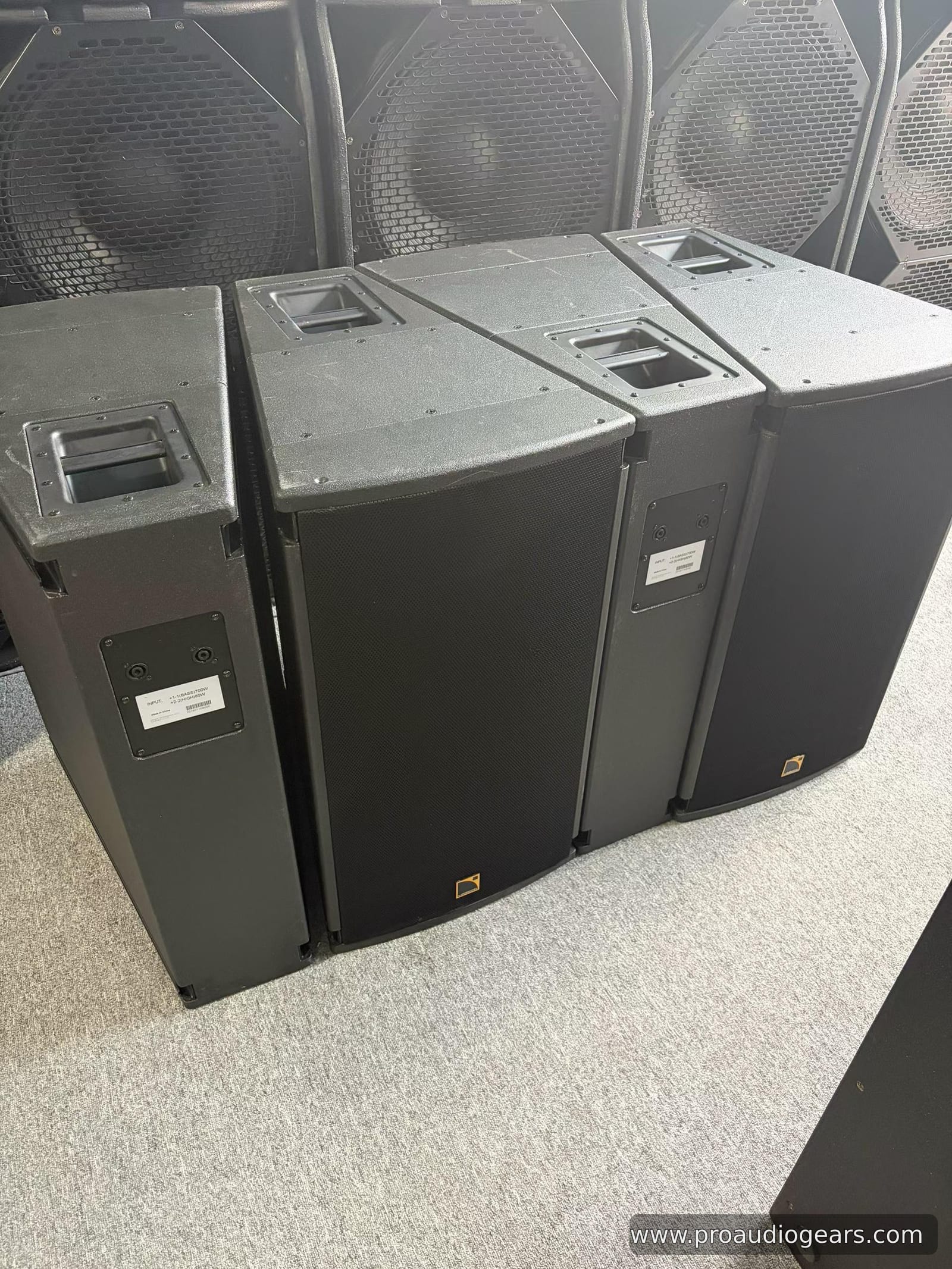
A used L-Acoustics X8 coaxial loudspeaker is a good example of the fill and small-room category: coaxial driver, compact cabinet, predictable pattern. Coaxial designs are popular for event work because the acoustic centre stays fixed regardless of where you stand, which helps when the audience is close and off-axis.
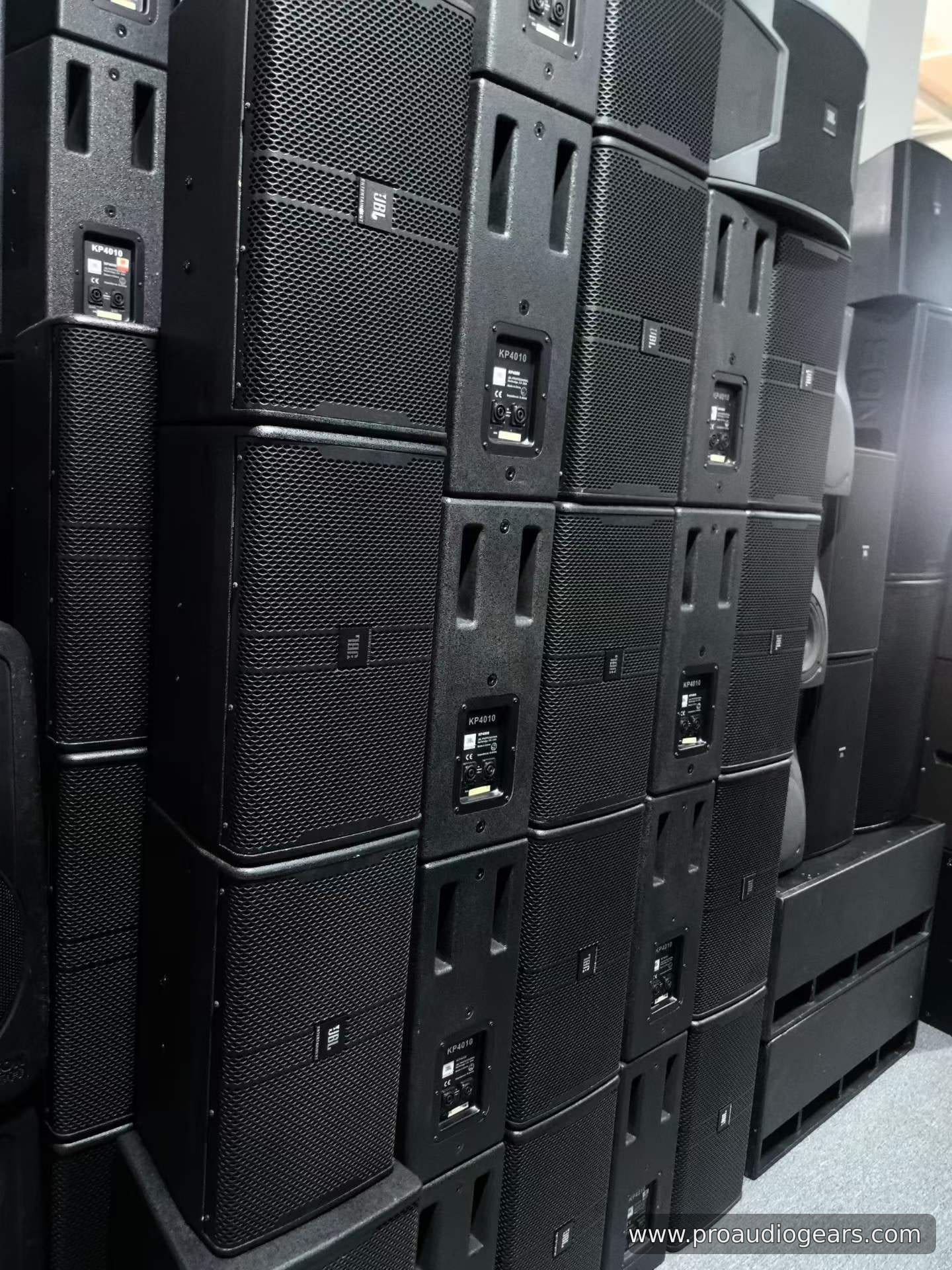
For the main pair on mid-size events, a passive 12-inch or 15-inch box with a known preset is often the most cost-effective route. A used JBL KP4010 two-way passive PA speaker fits that role: passive, simple to amplify, and easy to match with a DSP preset. Passive boxes also mean one amplifier channel per cabinet, which keeps rack weight and cable runs down compared with active designs.
Passive or active, and what it means for a used purchase
Active boxes carry their own amplification and DSP, which simplifies setup but adds failure points that age. Amplifier modules, switch-mode power supplies and DSP boards are the parts most likely to fail in a used active cabinet, and replacement modules may be unavailable or expensive for older models.
Passive boxes have almost nothing inside to fail: drivers, a crossover and wiring. That makes them attractive on the used market, because a cabinet that measures correctly will usually keep working. The trade-off is that you need amplifiers and processing, which most rental companies already own.
When buying used passive boxes, budget for new speakon connectors and a check of the crossover, particularly the capacitors and any protection bulbs. These are cheap parts but a failed protection circuit can take out a compression driver on the first loud gig.
What to inspect on a used point source cabinet
Inspection is mostly about the drivers and the cabinet, because the electronics are simple.
- Sweep each box with pink noise and a slow sine sweep. Listen for rub, buzz and rattle at low frequencies, which points to a shifted magnet or a damaged voice coil.
- Test the compression driver separately at low level. A dried ferrofluid or a partially blown diaphragm often sounds fine quietly and harsh at volume.
- Check the horn for cracks, especially at the throat and mounting points. Plastic horns fatigue and a crack will buzz under load.
- Look at the woofer surround. Foam surrounds perish; rubber surrounds last but can separate from the cone edge.
- Inspect the cabinet corners and fly points. Event boxes get flown, stacked and dropped. Cracked plywood around rigging points is a structural concern, not cosmetic.
- Confirm the grille and acoustic foam are intact. Missing foam changes the response and lets dust into the gap.
- Check the connectors. Speakon sockets work loose, and XLR or jack sockets on older boxes corrode.
Condition grade B stock is normal for event rental inventory. Expect scuffs and road wear, but insist on clean driver tests and sound cabinets.
Coverage, processing and system design
Point source systems live or die on coverage planning. Two boxes per side toed in slightly will interfere in the middle of the room unless you aim them carefully. A single box per side with the correct pattern is usually cleaner than two boxes fighting each other.
Processing matters more than many buyers expect. Even passive boxes benefit from a DSP preset with EQ, limiting and crossover to subs. If you are building a fleet around one model, get the manufacturer preset or measure the box yourself and store the settings. Consistency across rental stock is worth more than any single cabinet's specification.
Subwoofer matching is straightforward with point source: one sub per two tops for speech and light music, one per top for louder music events. Cardioid arrangements help when the stage is close to a wall or the client is sensitive to bass behind the stage.
Practical buying advice
Buy in matched pairs or quads where possible. Mixed stock complicates presets and looks unprofessional on a corporate job. Ask for serial numbers and check that the drivers are original or correct replacements; a cheap aftermarket diaphragm will change the sound and the reliability.
For export buyers, factor in crating and freight before comparing prices, and confirm voltage and connector standards for your market. Passive boxes avoid most voltage issues, which is one more reason they travel well.
Finally, keep spares. Two extra cabinets and a handful of diaphragms will cover most event emergencies, and used stock is the cheapest way to build that buffer. Point source boxes are simple enough that a competent technician can keep a fleet running for years, which is exactly why the used market for them remains strong.