Used Powered PA Speakers for Bars: A Practical Buyer's Guide
How to choose used powered PA speakers for bar installs and rentals: coverage, headroom, condition grading, sub matching and the inspection points that matter most.
A bar is one of the harder rooms to get right with a PA. The space is usually long and narrow or awkwardly L-shaped, the ceiling is low, the walls are hard, and the system has to cover background music at 2pm and a live band at 11pm without being touched. Powered speakers solve most of the installation problems, because there is no amp room, no speaker cable runs to calculate, and no mismatch between amplifier and driver. The trade-off is that you are buying electronics in every box, so buying used requires more discipline than buying used passive cabinets.
Start with the job, not the model
Before you look at any listing, write down three things: room dimensions, maximum audience, and how the space will actually be used. A 60-seat cocktail bar with occasional acoustic sets needs very different coverage from a 250-capacity sports bar with DJs on Friday and Saturday. Most bar failures are not about brand; they are about a 90 by 60 degree box being asked to cover a 20-metre room, or two 12-inch tops being pushed into clipping every weekend because nobody budgeted for subwoofers.
As a rule of thumb, a bar with a stage and dance area wants main speakers with at least a 15-inch woofer or a 12-inch with a 1.4-inch or larger compression driver, plus at least one subwoofer per side. A pure background-music bar can run smaller tops, but the moment live music is on the calendar, the smaller system becomes a bottleneck.
Coverage and dispersion matter more than wattage
Powered speakers are usually sold on peak SPL figures that tell you little about how they behave in a low room. What you want is controlled dispersion that keeps energy off the walls and ceiling. A 60 by 40 degree box aimed carefully will sound cleaner and go louder in a reverberant bar than a 90 by 60 degree box of the same power, because less energy is bouncing around the room.
For long, narrow rooms, consider aiming a wider box across the short dimension rather than down the length. For wide rooms with a central bar, two boxes toed in slightly will usually beat four boxes spread along the wall. If the room has a mezzanine or a raised seating area, plan for a delay or a separate zone rather than trying to cover it from the main hangs.
Two used models worth knowing
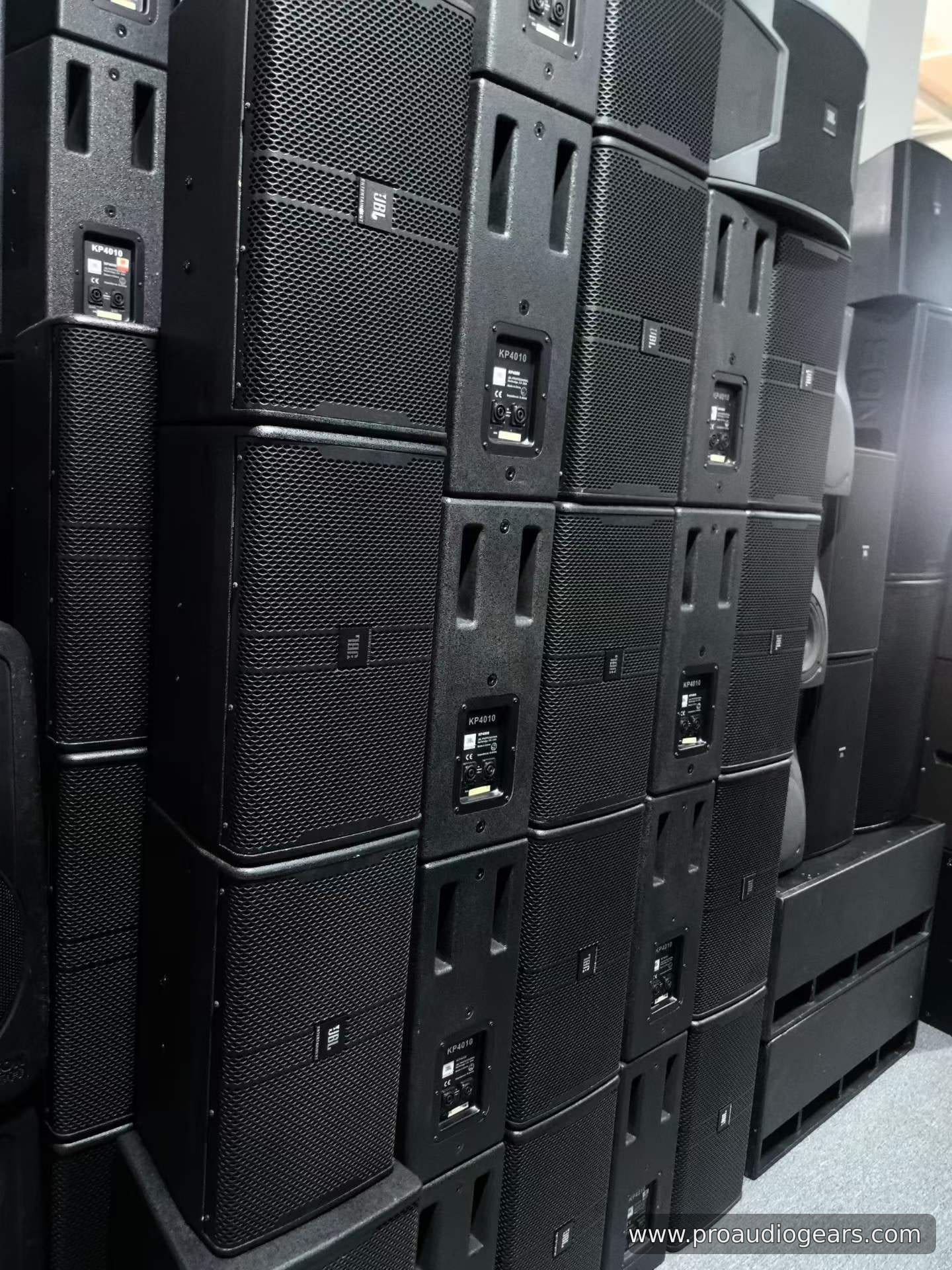
The used JBL SRX835P powered speaker is a common sight in bar installs because it is a three-way 15-inch box with enough output to carry a small live set without subs, and it takes a subwoofer cleanly when the budget allows. Condition A units are the ones to look for if the boxes will be visible to customers.
The used Electro-Voice ETX-35P powered speaker is another practical option: a three-way design with good pattern control and a sturdy cabinet, often found in B condition at dealer prices. Both are heavy, so check that your mounting points or stands are rated for the weight, and confirm handles and grilles are intact before you plan an install around them.
Subwoofers: plan for them from day one
A bar without low end sounds thin at low volume and strained at high volume. Even one powered 18-inch subwoofer per side changes the way the tops behave, because you can high-pass them and stop asking a 15-inch cone to reproduce kick drum. If you are building a system around used powered tops, budget for subs in the same purchase rather than adding them later; matching brands and series is easier when you buy together.
For a bar that hosts DJs, two subs is the realistic minimum. For acoustic and background use, one sub placed centrally can be enough, but check phase alignment with the tops by ear at the crossover point.
What to check on used powered speakers
Powered boxes carry amplifiers, DSP and power supplies inside the cabinet. That is where used risk lives. Work through this list before you commit:
- Power up every box individually and listen for fan noise, hum or rattle from the amplifier module.
- Play programme material at moderate level for at least ten minutes and check that the rear panel does not become uncomfortably hot.
- Test every input, including the second channel and any link output, with a known source.
- Confirm the DSP presets and limiters work and that the display, if fitted, is legible.
- Inspect the cabinet corners, grille and handle cups for impact damage that suggests the box has been dropped.
- Check the woofer surround and cone for tears, and push gently on the cone to listen for voice coil rub.
- Ask for the history: installed in a fixed venue, or toured? Fixed installs are usually kinder to electronics.
- Confirm the mains voltage configuration matches your market before export, particularly for 115V and 230V territories.
Condition grades and what they mean for a bar
A bar install is a long-term commitment, so condition matters more than in rental stock that gets refurbished every year. Condition A boxes are close to new cosmetically and should need nothing beyond a clean. Condition B is the sensible working grade for installed systems where the speakers sit above head height or behind a grille; expect scuffs, a replaced grille or minor cosmetic marks. Condition C is for spares and budget-driven projects where you can accept visible wear and possibly a module repair. Always ask for photos of the amplifier panel and the woofer, not just the front of the cabinet.
Matching the rest of the system
Powered speakers still need a source and control. A compact digital mixer such as a used Yamaha DM3 or Allen & Heath SQ-6 covers most bar needs, and a loudspeaker processor helps if you later add passive subs or delays. Do not overlook the practical items: adequate mains circuits, surge protection, and a rack or shelf that keeps the mixer away from spilled drinks.
Finally, think about how the system will be used by staff. A bar system that requires a trained engineer every night will be run badly. Label the mixer with two or three recallable scenes, set limiters so the system cannot be driven into distortion, and lock the amplifier panels or processor behind a cover if the venue is open to the public.
Buying used powered PA speakers for a bar is mostly about honesty: honest room measurements, honest expectations about volume, and an honest inspection of the electronics. Get those right and a used system will serve a venue for years at a fraction of new cost.