Used Line Array Export from China: A Dealer's Guide
What dealers and rental companies should verify before buying a used line array out of China: box matching, amp pairing, documentation, packing and inspection timing.
Buying a used line array out of China is a different exercise from buying one locally. The boxes may be identical, but the paperwork, the packing, the voltage question and the return path all change. This guide covers what actually matters when you are sourcing line array cabinets and supporting gear from a Chinese exporter, written for dealers, rental companies and installers who intend to put the system to work rather than park it in a warehouse.
Start with the system, not the box
A line array is a system, and a used one is only worth what its weakest link allows. Before you negotiate on cabinets, decide which of these three situations you are in.
- You are buying a complete, matched system with known processing and amplification.
- You are buying cabinets to extend a system you already own and can process yourself.
- You are buying cabinets as a speculative purchase to resell.
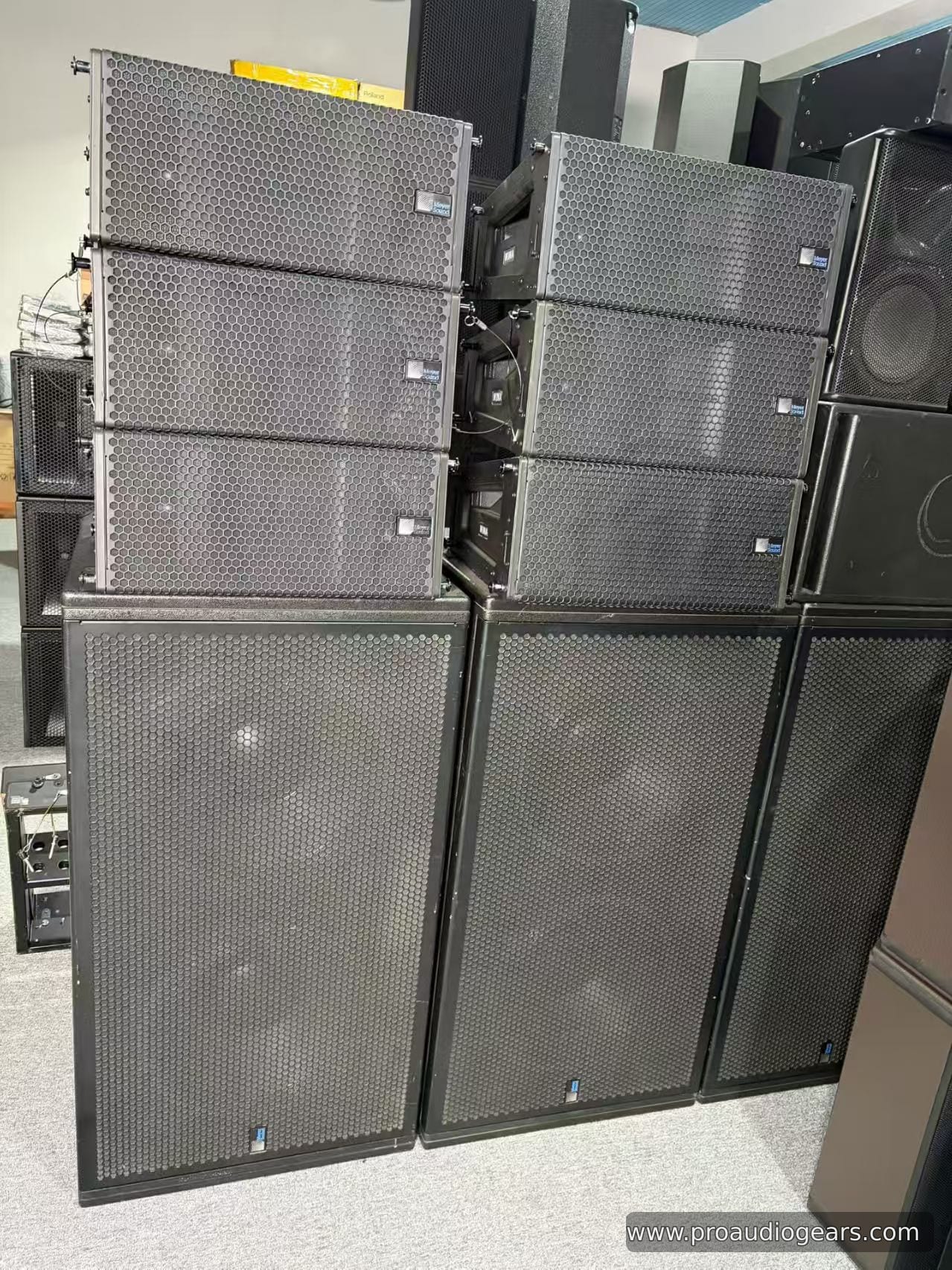
The third case is where most problems appear. Line array boxes are designed to work in arrays of a specific size, with specific splay angles and specific factory presets. A single cabinet with no preset documentation and no matching amplifier is a hard sell and a harder rental item. If you cannot name the processor and amplifier you will drive the boxes with, pause before you commit.
Self-powered boxes remove one layer of risk. A used RCF HDL 6-A line array module carries its own amplification and DSP, so what you need to verify is the module itself rather than a separate amp rack and preset library. Passive cabinets, such as a used d&b audiotechnik V8 cabinet, are often more attractive on price but require you to own or source the correct amplification and presets. Neither is automatically better; the point is to know which one you are buying before you compare quotes.
What to confirm before the deposit
Ask for specifics, in writing, and expect answers that match the serial numbers on the photographs.
- Serial numbers for every cabinet, photographed on the box, not transcribed from a list.
- Condition notes per unit, not an average for the lot. One dented grille and one damaged waveguide are not the same problem.
- Whether the cabinets come from a single original inventory or have been assembled from multiple sources. Mixed batches show up in paint tone, hardware and firmware versions.
- For powered boxes, the firmware or DSP version currently loaded, and whether it can be updated with tools you own.
- For passive boxes, whether original rigging frames, fly bars and link hardware are included, and whether any of it is third-party.
Rigging hardware is the item most often missing from export lots. Frames and link bars are expensive to buy separately and slow to source, and a cabinet without its matching hardware may not be usable in the array configuration you planned. Treat flight frames, bumper bars and tilt hardware as part of the deal, and get the inclusion list in writing.
Voltage, plugs and certification
China runs on 220 to 240 volts at 50 Hz. Most professional powered line array modules are switchable or auto-ranging, but not all, and the label on the back of the unit is the only version that counts. Confirm the input voltage range per cabinet, not per model family, because export versions and domestic versions can differ.
Connector types matter too. PowerCON, Socapex and standard Schuko or CEE plugs all appear on Chinese-market inventory. Ask which inlet is fitted and whether the original connectors are intact or have been replaced with local hardware. Replaced inlets are not necessarily a defect, but they are a sign the box has been serviced, and you should know that before you plan your distro.
If your market requires CE or other marking for installed work, check what documentation the seller can actually provide. A used cabinet rarely comes with a full technical file. Do not assume a declaration of conformity will be available for a discontinued model.
Amplification and processing in the same shipment
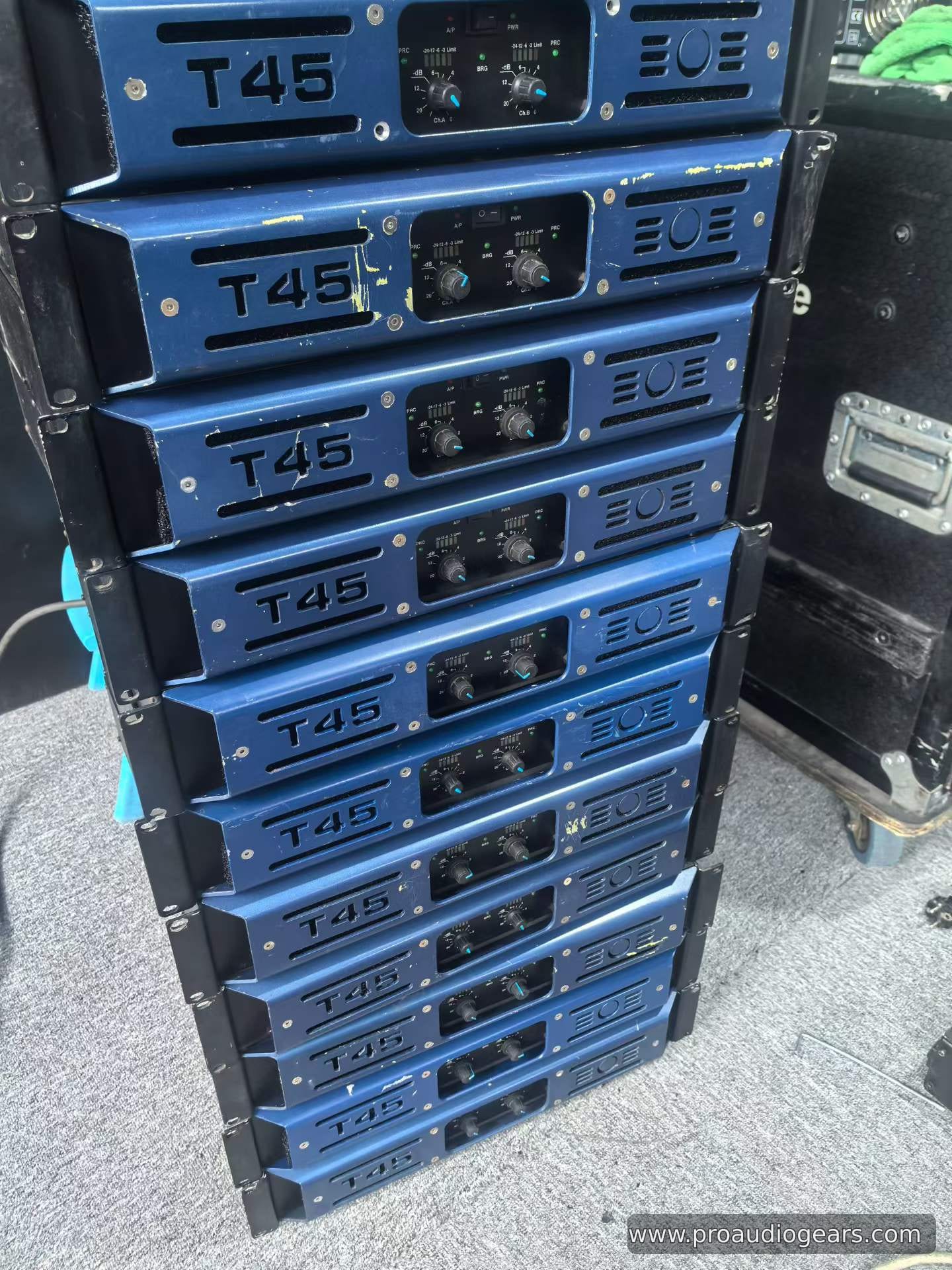
If you are buying passive line array cabinets, the amplifier and processor decision is not separate from the box decision. Shipping them together usually makes sense, and it also means you can test the pairing before it leaves. A used Lab.gruppen PLM 20K44 amplifier with Lake processing is a common companion for touring-grade passive arrays, and buying amplifier and cabinets from the same lot reduces the risk that the presets you need do not exist for the amplifier you end up with.
Condition grades differ sharply in this category. A grade C amplifier may be entirely serviceable but will likely need attention to fans, capacitors or front panel controls before it goes on the road. Budget for that, and ask for a photograph of the inside of the rack if the seller will provide one.
Inspection, packing and timing
Export purchases fail on logistics more often than on audio quality. Build the timeline backwards from your install date.
- Allow time for a pre-shipment inspection by a third party if the order value justifies it. This is the single most effective protection you have.
- Ask how cabinets will be packed. Line array boxes are heavy, front-heavy and easy to damage at the grille and waveguide. Original flight cases are ideal; custom crating is acceptable if it is braced and the cabinets are immobilized.
- Confirm whether shipping costs are quoted to port or to door, and who handles import clearance at your end.
- Confirm the Incoterm in writing and make sure your customs broker has seen the commercial invoice before the goods move.
Photograph everything on arrival before you unpack. Damage claims depend on evidence gathered in the first hour, not the first week.
A realistic view of price
Used line array pricing from China is attractive, but the delivered cost is what you should compare, not the unit price. Add freight, crating, insurance, duty, clearance and any refurbishment. A lot that looks twenty percent cheaper before shipping can land at the same cost as local stock with none of the inspection convenience.
Where Chinese export inventory wins is availability. Certain discontinued models that are hard to find in Europe or North America turn up in Asian rental inventories, and for a dealer who needs eight more boxes of a specific cabinet, that availability is worth a premium rather than a discount.
The short version
Buy the system, not the box. Get serial numbers and per-unit condition notes. Settle the rigging hardware question before you pay. Confirm voltage per unit. Keep amplification and processing in the same shipment as passive cabinets. Inspect before it ships, and photograph before you unpack. Do those things and a used line array from China is a normal commercial purchase rather than a gamble.