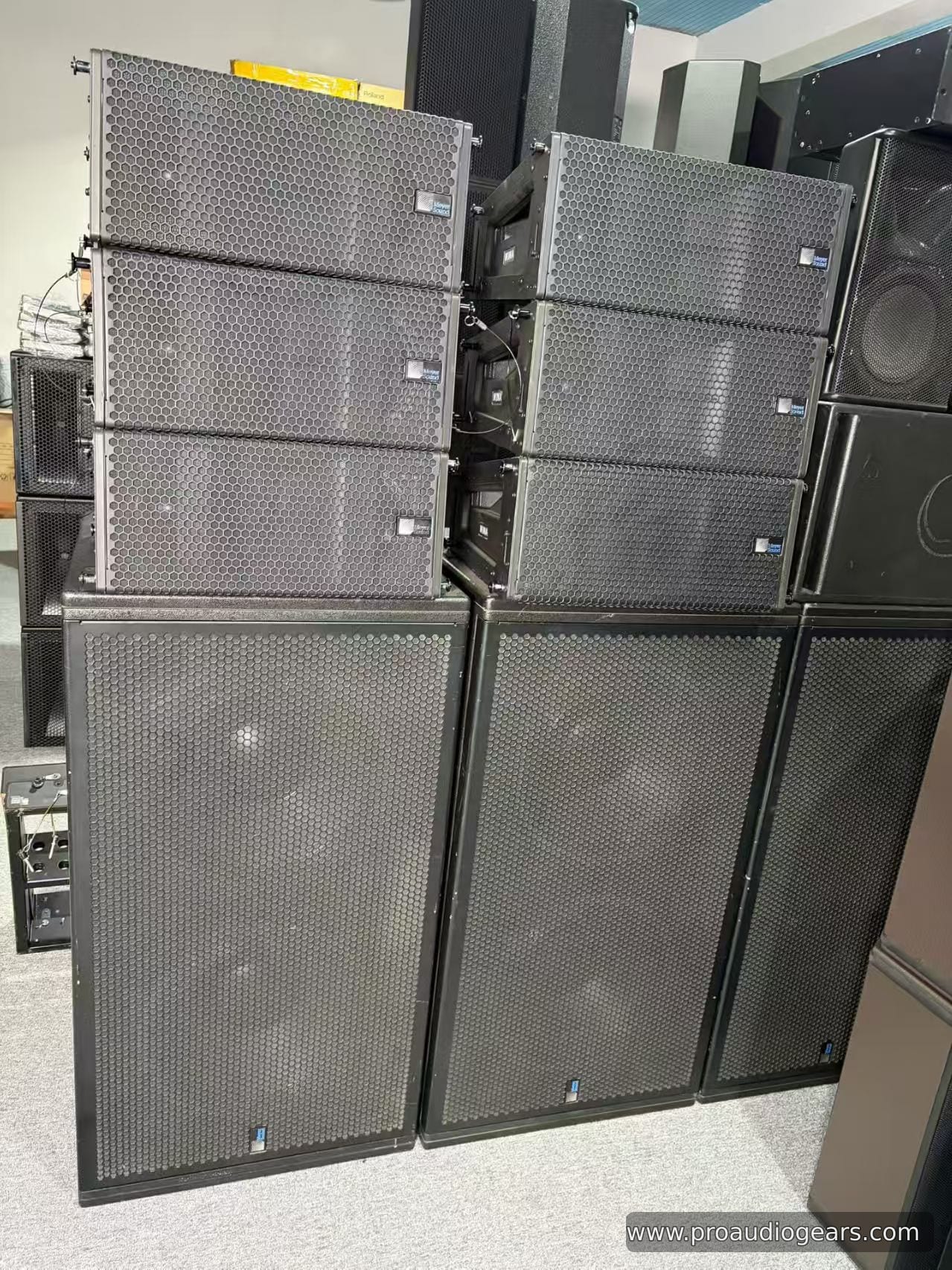
Line Array Fly Bars and Bumpers: A Used Buyer's Guide
Fly bars and bumpers decide whether a used line array is safe and usable. Here is what to check on frames, pins, shackles and load ratings before you buy.
The line array boxes get all the attention, but the fly bar is what actually holds the system in the air. When dealers buy used line arrays from China or anywhere else, the frames and bumpers are often the weakest part of the deal: mixed hardware, missing pins, bent arms, or a bar that fits one box model and nothing else in your inventory. This guide covers what a fly bar and bumper actually do, what to inspect, and how to avoid buying boxes you cannot hang.
What a fly bar and bumper actually do
A fly bar, sometimes called a rigging frame or bumper, is the interface between the loudspeaker array and the venue's rigging points. It bolts to the top cabinet, spreads the pickup points to the correct width, and sets the array's tilt angle. The bumper also carries the load of every box below it, so its rated working load limit matters more than its finish.
Manufacturers design these frames per model. An RCF HDL 6-A bar will not fit a d&b V8, and even within one brand, generation changes can alter bolt patterns and hole spacing. That is the single most common mistake in used purchases: assuming a bar in a photo belongs to the boxes next to it.
Check compatibility before anything else
Ask the seller for the exact model number stamped or labelled on the bar, not just the brand. Then compare it against the manufacturer's rigging documentation for the cabinet you plan to hang. Key details:
- Bolt hole count, spacing and thread type on the cabinet top plate
- Pickup point spacing and the shackle size the frame accepts
- Maximum number of boxes the bar is rated to carry
- Whether the bar supports single-point, two-point or bridle suspension
- Angle adjustment range and how the tilt is set and locked
If the seller cannot confirm the bar's model, price the deal as boxes only. A replacement bar can cost a meaningful fraction of a used cabinet, and for older or discontinued models it may be unavailable entirely.
Inspect the frame like a rigging component
Treat the fly bar as life-safety hardware, because that is what it is. On a used RCF HDL 6-A line array module or any other cabinet, the bar deserves a close look:
- Cracks or deformation at weld joints, especially where the arms meet the main beam
- Elongated or ovalised bolt holes, which indicate the frame has been loaded loose
- Bent arms or twisted beams, often from transport damage rather than use
- Corrosion, particularly on galvanised or painted steel that has been stored damp
- Missing, seized or mismatched quick-release pins and retaining clips
- Shackles that are unrated, uncertified, or worn at the pin and bow
Any crack, bend or ovalised hole is a rejection, not a repair candidate. Pins and shackles are cheap to replace with rated parts; structural damage is not.
Beware mixed and third-party hardware
Large rental inventories get rebuilt over time, and frames get separated from their original boxes. Watch for bars with welded-on modifications, drilled extra holes, or adapter plates that let one frame serve two cabinet types. Some of these adaptations are professionally engineered; most are not. Without documentation, assume the worst.
If a seller is bundling a used d&b audiotechnik V8 line array cabinet with a bar of uncertain origin, ask for photos of the frame's identification plate and the cabinet's top plate together. A frame that has been repainted may have hidden its original markings and any cracks beneath.
Load ratings, certification and paperwork
Professional line array frames carry a stated working load limit and, in most markets, fall under lifting equipment regulations. For export purchases, ask for:
- The manufacturer's rigging manual or load chart for the frame
- Any test or inspection certificate the seller holds
- The date and result of the last documented inspection, if any
Many used frames come with no paperwork at all. That does not make them unusable, but it shifts the inspection and sign-off burden to you or your rigging contractor. Budget for a formal inspection before the system goes out on a paid job, and never hang a frame whose history and rating you cannot establish.
Storage, transport and the small parts
Fly bars are awkward, heavy and easy to damage in transit. Ask how the seller stores them: stacked on a shelf, thrown in a case, or bolted to the cabinets. Bars left bolted to boxes during shipping can bend the cabinet top plate if the crate takes a hit.
Small parts decide whether the system is usable on day one. Confirm you are getting:
- The correct number of rated shackles per frame
- Quick-release pins with lanyards or clips
- Tilt adjustment hardware and any locking handles
- Bolt sets for attaching the bar to the cabinet
- Any link bars or coupling hardware for multi-frame arrays
Replacement pins and shackles are inexpensive; a missing custom tilt handle or link bar often is not.
Matching frames to your existing inventory
If you already run a line array, buy frames that match what you own, not just what is cheap. A bargain bar for a model you have two of is a spare; the same bar for a model you have twenty of is an operational asset. Rental companies should also count how many arrays they can realistically fly at once and buy at least one spare frame per fleet.
For dealers reselling into export markets, document each frame clearly: model, rated capacity, included hardware and inspection status. That paperwork is what separates a professional used package from a pile of cabinets.
A short pre-purchase checklist
- Confirm the bar's model number matches the cabinet model exactly
- Get photos of weld joints, bolt holes and the identification plate
- Verify the working load limit against the number of boxes you intend to hang
- Confirm rated shackles and pins are included
- Reject any frame with cracks, bends or ovalised holes
- Establish inspection and certification status before the system goes out on a job
Fly bars and bumpers are unglamorous, but they are the difference between a used line array that earns money and one that sits in the warehouse. Inspect them with the same rigour as the cabinets, and price missing or damaged hardware into the deal before you commit.